
Dialect-aware, not just Modern Standard Arabic
Modern Standard Arabic is what models are mostly trained on; it is not what customers type. A customer in Cairo, Riyadh, or Dubai writes in their own dialect, and an agent that only understands MSA misreads intent exactly where service matters most.
Dialect-aware agents are tuned per market: retrieval, understanding, and the register of the reply all match how the customer actually writes and speaks.
A customer in Cairo, Riyadh, or Dubai writes in their own dialect, and an agent that only understands MSA misreads intent exactly where service matters most.
RTL as a designed layout, not a mirror
Flipping a left-to-right interface produces a wrong-feeling product: numerals, mixed-direction text, icons, and emphasis all break in small ways. Right-to-left has to be designed: typography chosen for Arabic, alignment and flow built for the direction, the same brand tokens carried over.
The same applies to the agent's output. Citations, confidence levels, and mixed Arabic-English content need bidirectional handling that was planned, not patched.
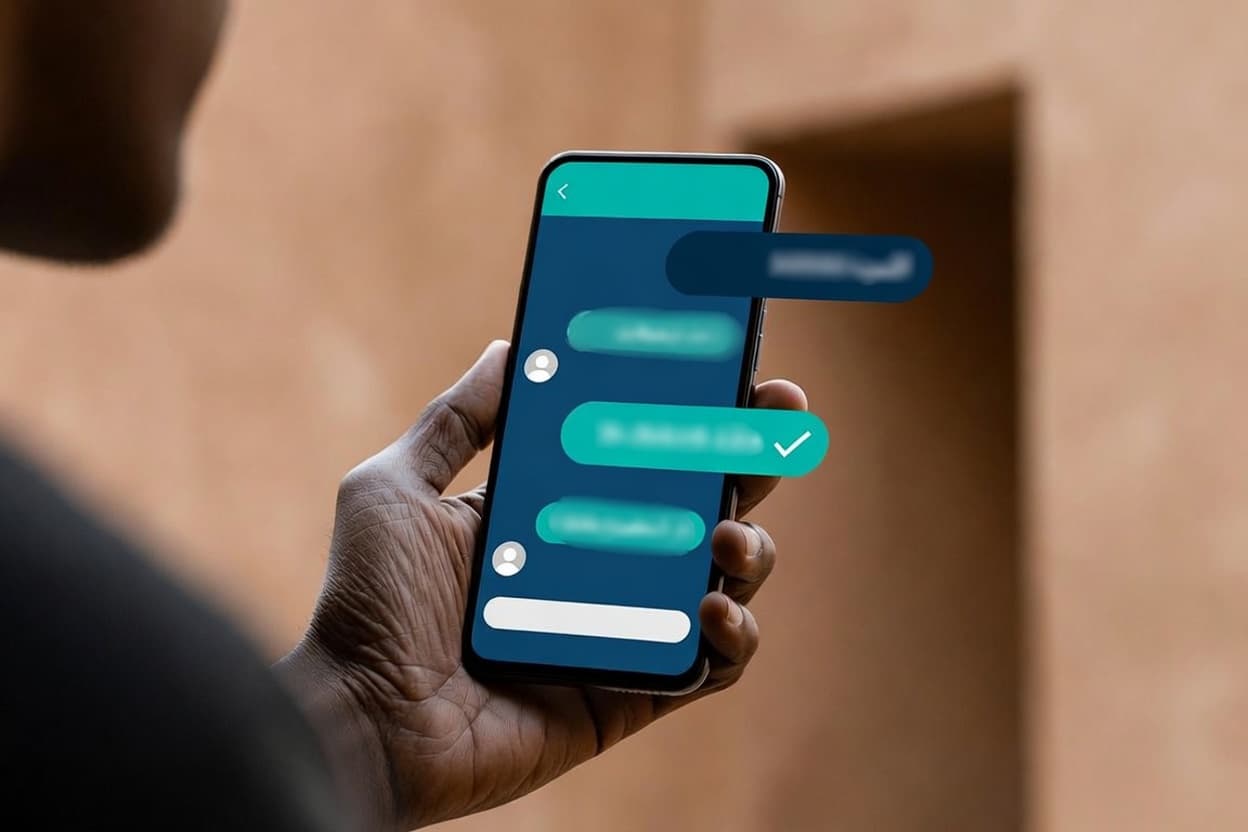
The channel reality: WhatsApp and voice
WhatsApp is the customer-service channel across MENA, so the agent has to live there as a first-class citizen, with voice close behind: Agentforce Voice carries spoken Arabic where Salesforce runs the process.
And because Arabic service concentrates in regulated markets, deployment is private: retrieval and grounding run in your environment, and customer data never leaves it.